Unlocking the Vascular-Brain Connection: How Your Blood Vessels Shape Lifelong Brain Health
Healthy blood vessels are not just a heart issue. They help power memory, focus, and brain resilience across life.

Your brain is only as resilient as the vessels feeding it.
- →Healthy blood vessels deliver oxygen and nutrients that support memory, focus, processing speed, and emotional regulation.
- →High blood pressure, diabetes, high cholesterol, smoking, and inactivity can injure brain vessels quietly for years before symptoms appear.
- →Vascular disease can cause strokes, silent infarcts, small-vessel disease, and vascular cognitive impairment.
- →Brain-healthy habits are usually vessel-healthy habits: blood pressure control, exercise, sleep, a Mediterranean-style diet, and not smoking.
- →Sudden weakness, numbness, speech trouble, vision changes, dizziness, or confusion should be treated as an emergency.
When most people think about a healthy brain, they picture mental exercises, memory games, or learning new skills. Those things can matter. But one of the most important parts of brain health is much more basic: blood flow.
Your brain is an energy-hungry organ. It represents only a small fraction of body weight, but it depends on a constant supply of oxygen, glucose, and nutrients. That supply arrives through an intricate network of arteries, veins, and tiny capillaries. When those vessels are healthy, the brain has the fuel it needs for memory, focus, creativity, movement, language, and emotional balance.
When vascular health declines, the brain may not fail all at once. Sometimes the damage is quiet: a little more white-matter disease on MRI, a small silent stroke, slower processing speed, or a gradual change in memory and attention. Over time, those vascular injuries can add up.
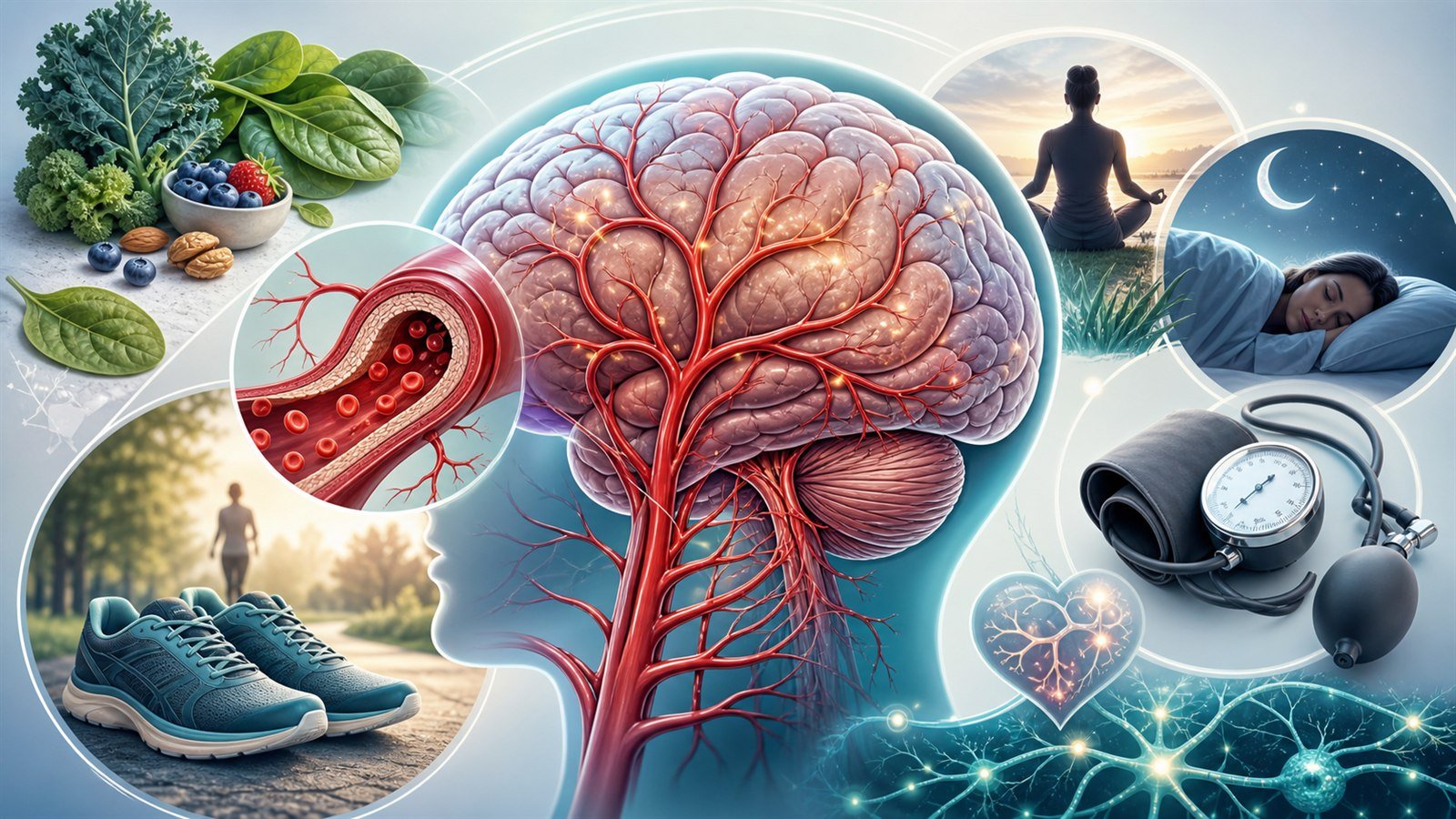
How vascular health fuels the brain
The brain cannot store oxygen in any meaningful way. It needs a steady supply every second. Blood vessels deliver that oxygen, carry glucose to working neurons, and remove metabolic waste products from active brain tissue.
That is why vascular disease can show up as more than a heart problem. It can become a thinking problem, a balance problem, a speech problem, or a memory problem. In stroke, the interruption is sudden. In small-vessel disease, the injury may accumulate slowly over years.
The bottom line: if your vascular system is struggling, your brain may struggle too.
What happens when vascular health declines?
Many vascular problems begin silently. High blood pressure, high cholesterol, diabetes, smoking, and chronic inflammation can gradually damage the lining of blood vessels. Arteries may become stiffer. Small vessels may narrow. The brain's tiny circulation can become less able to respond to stress.
Over time, this can lead to reduced blood flow, microbleeds, small blockages, silent infarcts, and a higher risk of clinical stroke. It can also contribute to cognitive changes, especially in attention, processing speed, planning, and mental flexibility.1
Some warning signs are sudden and should be treated as an emergency: sudden confusion, trouble speaking, vision changes, dizziness, weakness or numbness in the face, arm, or leg, or the worst headache of life. Call 911 for sudden stroke-like symptoms.5
Other signs can be more subtle: memory lapses that worsen quickly, difficulty concentrating, slower thinking, gait changes, or trouble managing tasks that used to feel automatic. These symptoms do not always mean vascular cognitive impairment, but they are worth discussing with a clinician.
The link between vascular disease and dementia
Vascular cognitive impairment is an umbrella term for thinking problems caused or worsened by blood vessel disease. It can happen after a major stroke, after multiple smaller strokes, or from long-standing small-vessel disease that damages the brain's wiring over time.
Vascular dementia is one end of that spectrum. It is often described as the second most common form of dementia after Alzheimer's disease. In real life, the boundaries are often mixed: many older adults have both Alzheimer-type pathology and vascular brain injury. That combination can make symptoms worse than either process alone.
One reason vascular cognitive impairment can look different from classic Alzheimer's disease is that it often affects executive function early. Patients may describe slower thinking, trouble organizing tasks, difficulty multitasking, reduced attention, or a sense that their brain is working through fog.
Small-vessel disease: the quiet brain injury many people never hear about
Not all vascular brain injury comes from a dramatic stroke. The brain is filled with tiny penetrating arteries that feed deep white matter, basal ganglia, thalamus, and brainstem structures. These small vessels are especially vulnerable to high blood pressure, diabetes, aging, and smoking.
On MRI, small-vessel disease may appear as white-matter hyperintensities, lacunes, or microbleeds. These findings are common with aging, but they are not meaningless. Greater small-vessel disease burden is associated with higher risk of stroke, cognitive impairment, gait difficulty, and loss of independence.2
The good news is that small-vessel disease is not just a radiology phrase. It is a prevention target. Blood pressure control, diabetes care, cholesterol management, physical activity, and smoking cessation all matter.
The glymphatic system: the brain's cleaning crew
Researchers have also described a waste-clearance pathway in the brain called the glymphatic system. It is most active during sleep and helps clear metabolic byproducts from brain tissue. The science is still evolving, but it reinforces a practical point: brain health depends on more than neurons alone. Blood vessels, sleep, inflammation, and fluid movement all interact.
This is one reason poor sleep, sleep apnea, uncontrolled blood pressure, and vascular disease may affect more than energy levels. They may influence the environment in which brain cells have to function every day.
Who is at greatest risk?
Some risk factors cannot be changed. Age matters. Family history matters. Prior stroke or TIA matters. But many of the biggest vascular-brain risks are modifiable.
- High blood pressure
- Diabetes or insulin resistance
- High LDL cholesterol
- Smoking
- Obesity
- Physical inactivity
- Sleep apnea
- Atrial fibrillation or other heart rhythm disorders
- Prior stroke, TIA, or known vascular disease
Addressing these factors can lower the risk of stroke and may also reduce the risk of cognitive decline over time.3
Lifestyle strategies to protect your vascular brain
Eat for your brain and arteries. A Mediterranean-style diet rich in vegetables, fruits, whole grains, legumes, fish, olive oil, nuts, and seeds is associated with better cardiovascular and cognitive outcomes in multiple studies. Leafy greens, berries, oily fish, nuts, seeds, oats, and other whole grains are practical places to start.
Move to improve blood flow. Regular exercise lowers blood pressure, improves insulin sensitivity, supports cholesterol control, and increases blood flow to the brain. A common public-health target is at least 150 minutes per week of moderate aerobic activity, such as brisk walking or cycling, plus strength training when appropriate.4
Manage stress without ignoring the body. Chronic stress can raise blood pressure, worsen sleep, increase inflammation, and push people toward less healthy habits. Relaxation techniques, mindfulness, yoga, tai chi, therapy, community support, and better sleep routines can all help.
Monitor your numbers. Blood pressure, blood sugar, cholesterol, body weight, sleep quality, and tobacco exposure are not abstract metrics. They are signals about the environment your brain vessels live in every day.
If you do only one thing this week, check your blood pressure correctly at home or at a clinic. Hypertension is one of the most powerful and treatable risk factors for stroke and vascular cognitive impairment.
The role of medical care
Lifestyle is powerful, but it is not always enough by itself. Some people need medication to control blood pressure, cholesterol, diabetes, atrial fibrillation, or other risk factors. That is not failure. It is prevention.
Blood pressure checks, blood sugar testing, cholesterol screening, sleep apnea evaluation, heart rhythm monitoring when appropriate, and follow-up after TIA or stroke can catch problems before they become irreversible. Never stop or adjust prescribed medication without talking with your healthcare professional.
New frontiers: where the research is going
Researchers are studying more precise blood pressure targets, better imaging markers of small-vessel disease, interventions to protect the brain's tiny vessels, and the relationship between sleep, glymphatic clearance, vascular inflammation, and neurodegeneration.
The big message is already clear enough for everyday life: vascular prevention is brain prevention. The earlier you start, the more years your brain has to benefit.
Frequently Asked Questions: Vascular Health & Brain Function
How does vascular health affect the brain?
Healthy blood vessels deliver oxygen and nutrients that your brain needs for memory, focus, and clear thinking. Poor vascular health can slow blood flow, leading to cognitive decline, strokes, or even vascular dementia.
What is the link between vascular disease and dementia?
Vascular diseases, like high blood pressure or atherosclerosis, can damage brain blood vessels, causing tiny strokes or reduced blood flow. This increases the risk of vascular dementia and may worsen Alzheimer's disease.
Can improving vascular health boost brain power?
Yes. Studies show that lowering blood pressure, exercising, and eating a heart-healthy diet can improve memory, processing speed, and reduce the risk of cognitive decline.
What are the warning signs that poor vascular health is harming my brain?
Sudden confusion or trouble speaking, memory problems that worsen quickly, vision changes or dizziness, and weakness or numbness in the face, arm, or leg can be warning signs. If you notice sudden stroke-like symptoms, seek medical help immediately.
Which foods support both vascular and brain health?
Leafy greens such as spinach and kale, berries such as blueberries and strawberries, fish rich in omega-3s such as salmon and sardines, nuts and seeds such as walnuts and flaxseed, and whole grains such as oats and brown rice are all reasonable choices.
How much exercise is needed for better vascular and brain health?
Aim for at least 150 minutes per week of moderate aerobic exercise, such as brisk walking or cycling, if your clinician says it is safe for you. Even shorter walks are a good starting point for people who are currently inactive.
Can stress harm my blood vessels and my brain?
Yes. Chronic stress can raise blood pressure, worsen sleep, and strain blood vessels, increasing risk for heart disease, stroke, and cognitive decline. Stress management is part of vascular brain care.
Are there early signs of vascular problems in the brain?
Often, the warning signs are subtle: mild forgetfulness, difficulty concentrating, slower thinking, or changes in walking. Regular health checkups can catch risk factors before major problems develop.
Is vascular cognitive impairment reversible?
Early intervention can sometimes slow progression and may partially improve mild symptoms, especially when blood pressure, blood sugar, cholesterol, sleep, exercise, and smoking are addressed. Recovery depends on the cause and severity.
Who is at greatest risk for vascular-related brain problems?
People with high blood pressure, diabetes, high cholesterol, obesity, smoking exposure, atrial fibrillation, prior stroke or TIA, or a family history of stroke or dementia are at increased risk and should be especially attentive to vascular brain health.
Conclusion: invest in your vascular brain today
The connection between vascular health and brain function is not just a medical curiosity. It is a call to action for anyone who wants to stay mentally sharp, independent, and resilient over time.
Start with small changes: add greens to your plate, take a walk, improve sleep, manage stress, stop smoking if you smoke, and schedule a checkup. Your brain and your future self will thank you.
Have more questions? Explore more articles on The Vascular Brain for practical, evidence-based guidance on stroke prevention, recovery, and lifelong vascular brain health.
References
- Gorelick PB, Scuteri A, Black SE, et al. Vascular contributions to cognitive impairment and dementia: a statement for healthcare professionals from the American Heart Association/American Stroke Association. Stroke. 2011;42(9):2672-2713. PubMed
- Debette S, Markus HS. The clinical importance of white matter hyperintensities on brain magnetic resonance imaging: systematic review and meta-analysis. BMJ. 2010;341:c3666. PubMed
- Williamson JD, Pajewski NM, Auchus AP, et al. Effect of intensive vs standard blood pressure control on probable dementia: a randomized clinical trial. JAMA. 2019;321(6):553-561. PubMed
- Centers for Disease Control and Prevention. Adult activity: an overview. CDC
- National Institute of Neurological Disorders and Stroke. Stroke signs and symptoms. NINDS
Related guides
Keep building the picture.
- Stroke and dementia How vascular injury contributes to cognitive decline.
- What is a stroke? Why blood flow interruption causes sudden brain symptoms.
- Prevention guide Plain-language prevention steps for patients and families.
- Post-stroke fatigue How energy, sleep, mood, and recovery interact after stroke.
Article written by