Post-Stroke Dysphagia: Screening, Silent Aspiration, and Feeding Decisions
Half of acute stroke patients can't swallow safely, and the ones who aspirate silently look fine at the bedside. The most protective order on admission is the one that keeps the water pitcher away until the screen is done.
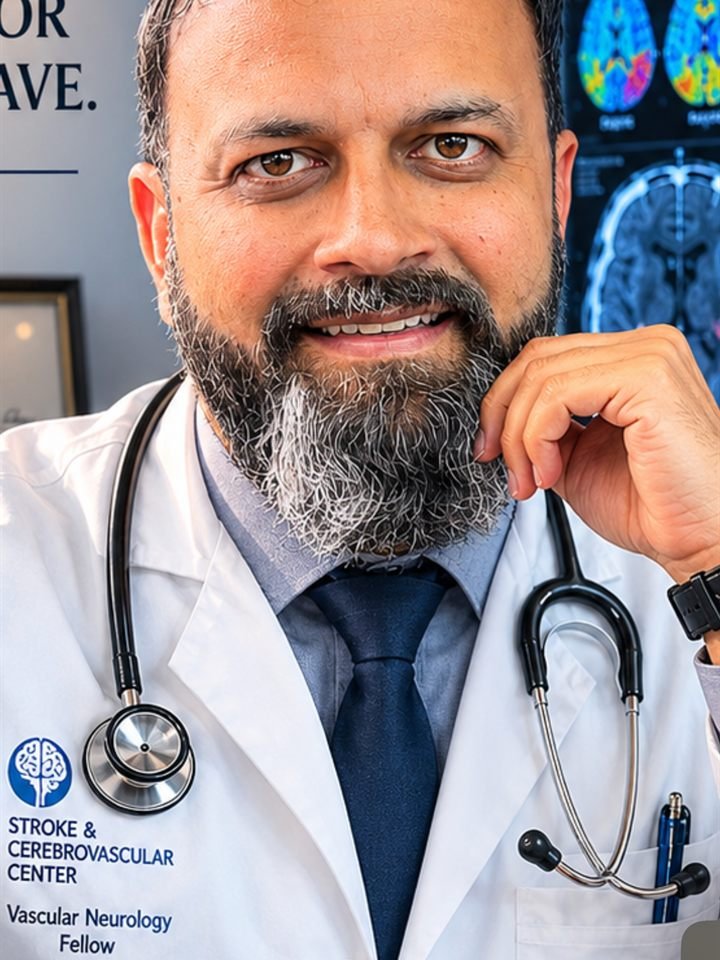
The most protective order in acute stroke costs nothing: NPO until screened.
- →Dysphagia affects roughly a third to half or more of acute stroke patients depending on how hard you look — and it roughly triples the risk of pneumonia. Confirmed aspiration raises it further still.
- →Nothing by mouth — food, water, or pills — until a swallow screen is done. Early screening before oral intake is guideline-endorsed and is the single cheapest pneumonia-prevention measure in stroke care.
- →Silent aspiration — aspiration with no cough, no wet voice, no distress — is common. A patient who "took sips fine" can still be seeding their right lower lobe. That is what instrumental studies (VFSS, FEES) are for.
- →For patients who cannot swallow safely: early NG feeding in the first days, not early PEG. In FOOD, early PEG increased death or poor outcome versus NG; early tube feeding showed a non-significant mortality trend favoring earlier feeding. PEG is for dysphagia that persists.
- →Most post-stroke dysphagia improves within the first weeks. The plan should be built to de-escalate: reassess, upgrade the diet, and get the tube out when the swallow recovers.
The most dangerous object on a stroke unit is not a heparin drip or a blood pressure ordered too low. It is a meal tray, delivered in good faith to a patient whose swallow nobody has checked.
Stroke kills twice: once through the brain, and again through the complications that follow. Pneumonia is one of the biggest of those second strikes, and much of it starts as aspiration in the first days — often quietly, in a patient who looks comfortable and "handles sips fine." Dysphagia management is unglamorous, protocol-driven medicine, and it is one of the places where a stroke unit earns its mortality benefit.
How big the problem actually is
Estimates of dysphagia frequency after stroke depend on how it is sought: roughly a third of patients by bedside testing, and half or more when instrumental studies are used. The same systematic review that established those numbers found dysphagia carried about a three-fold increase in pneumonia risk, with confirmed aspiration raising it substantially further.1 Pneumonia, in turn, is one of the leading drivers of death and prolonged admission after stroke — which is why a swallow screen belongs in the same mental category as an antithrombotic: secondary prevention, delivered on day one. Where pneumonia severity itself needs sizing at the bedside, that is the job of CURB-65 — a score we host with exactly this aspiration-after-stroke frame in mind.
Who is highest risk? Brainstem strokes (the swallowing machinery itself), bilateral or large hemispheric infarcts, depressed consciousness, dysarthria or a wet voice, and facial weakness all raise the pre-test probability — but none of them, present or absent, replaces the screen. Vertebrobasilar and large MCA infarcts carry the highest dysphagia rates; occipital PCA strokes do not, unless the lesion also involves brainstem or thalamus.
Screening: before anything crosses the lips
The rule is simple enough to put on a badge card: no food, no water, no oral medications until the swallow screen is passed. The 2026 AHA/ASA acute ischemic stroke guideline recommends a bedside swallow screen before any liquid or food (Class 1), and "early" should mean hours, not the next calendar day — an unscreened night is a night of aspirated sips and crushed aspirin in applesauce.2
Screening is a triage act, deliberately designed so that trained nursing staff can do it around the clock. Validated tools — sequential water-swallow protocols and multi-consistency screens like the Gugging Swallowing Screen — grade the risk and map it to an initial diet recommendation.3 A failed or borderline screen means the patient stays NPO and the speech-language pathologist is consulted. What the screen is not is a diagnosis: it sorts patients into "probably safe to start" and "needs real assessment."
| Step | Who / what | What it decides |
|---|---|---|
| 1. Screen | Nurse-administered validated tool, before any oral intake | Safe to start eating vs stay NPO and escalate |
| 2. Clinical assessment | Speech-language pathologist bedside evaluation | Diet texture, liquid consistency, compensatory strategies |
| 3. Instrumental study | Videofluoroscopy (VFSS) or endoscopic evaluation (FEES) | Confirms aspiration — including silent aspiration — and guides therapy |
| 4. Reassess | Serial SLP review through the admission | Diet upgrades, tube removal, discharge plan |
Silent aspiration: the patient who fools the bedside
The cough reflex is the bedside's smoke alarm, and in a substantial fraction of aspirating stroke patients the alarm is disconnected: material enters the airway with no cough, no throat-clear, no change in voice. This is silent aspiration, and it is the reason a passed sip of water at the bedside is reassurance, not proof.
Suspect it when the story and the exam disagree — recurrent fevers or infiltrates in a patient "eating fine," a wet-sounding voice minutes after meals, unexplained oxygen dips during feeding, or a brainstem stroke where sensation itself is impaired. This is the patient who earns an instrumental study even with a reassuring screen. And on the unit, treat fever plus new tachypnea in any dysphagic stroke patient as pneumonia until proven otherwise — the same trap-avoidance logic we describe on the qSOFA page, where stroke deficits distort every screening variable.
A passed water swallow means "safe to proceed carefully." It has never meant "cannot be aspirating."
Management: texture, therapy, and the order-set details that prevent pneumonia
For patients who can eat with modification, management is a package, and the package matters more than any single element:
- Texture and liquid modification, prescribed by the SLP and written in unambiguous terms (standardized descriptors rather than ward slang). Modified diets reduce aspiration on the study; be honest that thickened liquids are unpleasant, hurt hydration compliance, and are a bridge to be stepped down, not a destination.
- Compensatory strategies and swallow therapy — postural maneuvers, effortful swallow, and progressive rehabilitation, which belongs inside the same early mobilization philosophy we cover in why early stroke rehab matters.
- Oral care — scheduled, documented mouth care reduces the bacterial load that turns micro-aspiration into pneumonia. It is the least glamorous order in the set and one of the most defensible.
- Medication review with pharmacy — every pill needs a route plan. Some tablets crush safely, some must never be crushed, and some (including certain anticoagulant and antiplatelet formulations) need substitution rather than improvisation. "Crush everything into pudding" is not a plan; it is a drug-error generator.
- Aspiration precautions that are actually followed — upright for meals and after them, supervised feeding where needed, suction available for the high-risk.
Feeding decisions: what the FOOD trials settled
For the patient who cannot swallow safely at all, the questions are when to feed and through what. The FOOD trial collaboration is still the largest randomized answer. In the early-versus-avoid trial (n=859), early enteral feeding was associated with a 5.8% absolute reduction in death versus delaying tube feeding at least a week — a trend that did not reach statistical significance (p=0.09). In the PEG-versus-NG trial (n=321), early PEG increased death or poor outcome by 7.8% (p=0.05) and should be reserved for dysphagia that persists, not used as a first-week convenience.4
The practical sequence most services follow: NG feeding started early once the patient is stable, serial SLP reassessment through the first one to two weeks, and PEG discussed for the minority whose dysphagia is clearly not resolving — commonly framed around the two-to-four-week mark, earlier when the lesion (bilateral, brainstem) predicts a long road. That conversation is a goals-of-care conversation as much as a technical one, and it deserves the same structure as the rest of the discharge plan — which is exactly why swallow status and feeding route have their own line in our discharge checklist.
Recovery: build the plan to de-escalate
The natural history is mostly encouraging: swallowing recovers in the majority of patients over the first days to weeks as edema settles and networks reorganize. That is why every restriction placed in week one needs a reassessment date attached. The failure mode of dysphagia care is not only the missed screen on day one — it is the patient discharged on honey-thick liquids nobody ever revisited, dehydrated and miserable in week six. Recovery timelines, including swallowing, are something families ask about constantly; we walk the broader arc in the stroke recovery timeline and in the first 24 hours after stroke, where the swallow screen makes its first appearance.
The bottom line
Dysphagia is the stroke complication with the best ratio of preventable harm to required technology. Screen before anything passes the lips. Respect silent aspiration enough to use instrumental studies when the story does not add up. Feed early through an NG tube when the swallow is unsafe, and save PEG for persistence, not convenience. Do the oral care. Route every medication deliberately. And put a date on every restriction — because the goal is not a safely restricted patient; it is a patient eating dinner again.
Frequently asked questions.
Why are stroke patients kept NPO until a swallow screen?
Because dysphagia affects up to half of acute stroke patients and roughly triples pneumonia risk, and there is no reliable way to identify safe swallowers without testing. The 2026 AHA/ASA acute ischemic stroke guideline recommends a bedside swallow screen before any liquid or food.
What is silent aspiration?
Silent aspiration is entry of food or liquid into the airway without any cough, throat-clearing, or voice change — the protective reflexes that normally signal aspiration are impaired. It is common after stroke and cannot be excluded at the bedside, which is why instrumental studies (videofluoroscopy or FEES) are used when suspicion is raised by recurrent fevers, wet voice, oxygen dips with meals, or brainstem involvement.
When does a stroke patient need a feeding tube?
When the swallow is unsafe for adequate nutrition, start enteral feeding through a nasogastric tube in the first days rather than waiting a week. FOOD found a non-significant 5.8% absolute reduction in death with early tube feeding (p=0.09) and a 7.8% increase in death or poor outcome with early PEG versus NG (p=0.05). Early PEG is not the default.
When is a PEG placed instead of an NG tube?
PEG is reserved for dysphagia that persists despite reassessment — commonly discussed around two to four weeks, sooner when the stroke pattern predicts prolonged dysphagia. It is a decision about trajectory and goals of care, not a routine upgrade from NG.
Do thickened liquids prevent pneumonia?
Thickened liquids reduce observed aspiration of thin liquids on swallow studies, but their effect on pneumonia is less certain, and they carry real costs: reduced palatability, worse hydration, and lower compliance. They should be prescribed by a speech-language pathologist as a step-down bridge with a reassessment date, not left in place indefinitely.
Can pills be crushed for a dysphagic stroke patient?
Only medication by medication, with pharmacy input. Some tablets crush safely; modified-release and coated formulations generally must not be crushed; and some drugs need substitution or a different route. Every medication on the list needs an explicit route plan while the patient is dysphagic.
References.
- Martino R, Foley N, Bhogal S, Diamant N, Speechley M, Teasell R. Dysphagia after stroke: incidence, diagnosis, and pulmonary complications. Stroke. 2005;36(12):2756-2763. PubMed
- Prabhakaran S, Gonzalez NR, Zachrison KS, et al. 2026 Guideline for the Early Management of Patients With Acute Ischemic Stroke: A Guideline From the American Heart Association/American Stroke Association. Stroke. 2026;57(8):e316-e436. PubMed
- Trapl M, Enderle P, Nowotny M, et al. Dysphagia bedside screening for acute-stroke patients: the Gugging Swallowing Screen. Stroke. 2007;38(11):2948-2952. PubMed
- Dennis MS, Lewis SC, Warlow C; FOOD Trial Collaboration. Effect of timing and method of enteral tube feeding for dysphagic stroke patients (FOOD): a multicentre randomised controlled trial. Lancet. 2005;365(9461):764-772. PubMed
Related guides
Keep building the picture.
- CURB-65 calculator Size the aspiration pneumonia this article is trying to prevent.
- 2026 stroke guideline: what changed The same document that widened reperfusion made swallow screening Class 1.
- Stroke discharge checklist Swallow status and feeding route have their own line before anyone goes home.
- qSOFA calculator Why infection screens misbehave on a stroke unit — in both directions.
- The first 24 hours after stroke Where the swallow screen first appears in the family-facing timeline.
Article written by